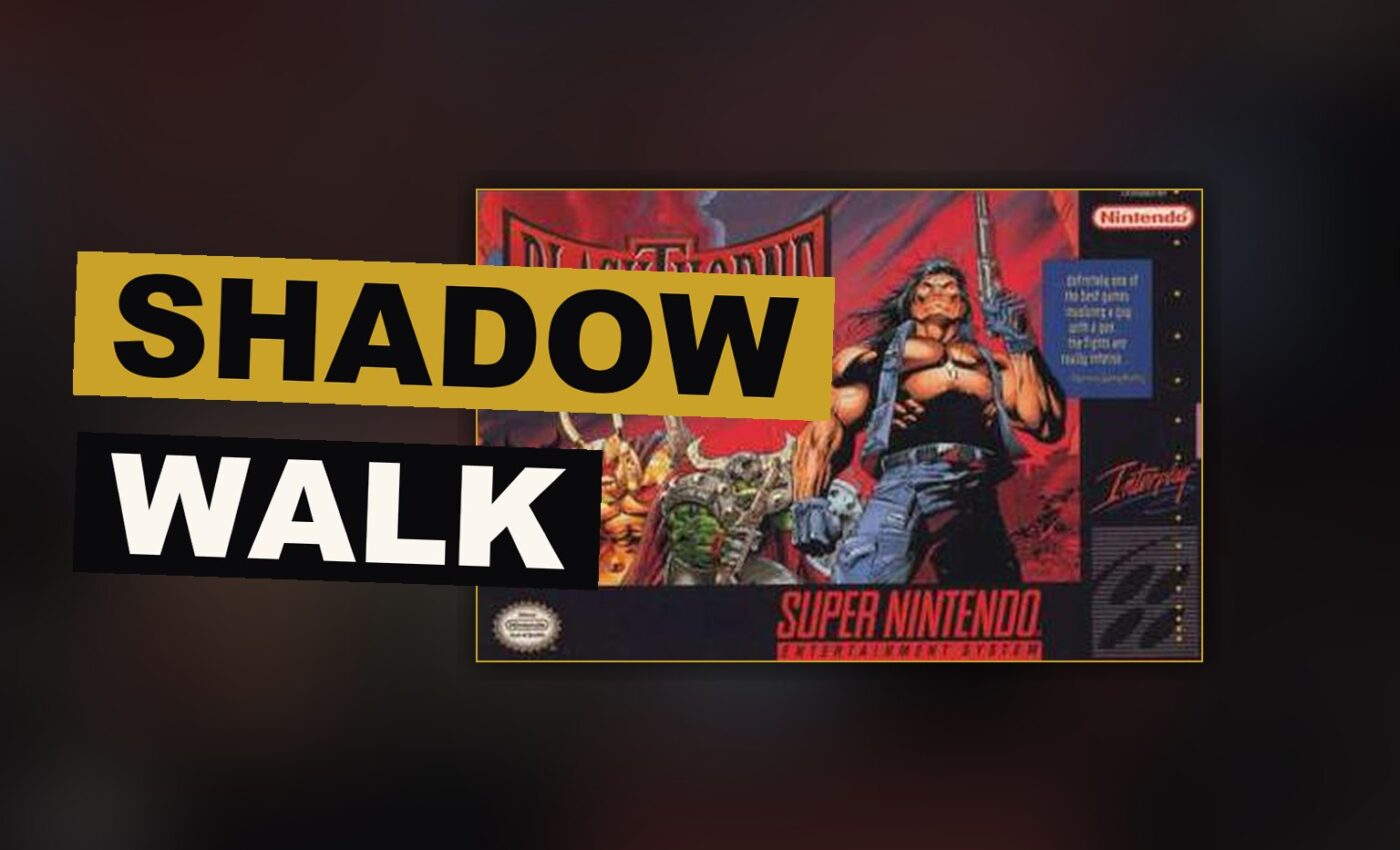
Blackthorne puts players in control of a fighter on a strange world, armed with a shotgun and the choice to press close against a wall and disappear into shadow. The Super Nintendo game brings together careful animation with hard platform puzzles, and for the most part the two work well side by side.
The setup is simple. A hero returns to a kingdom taken over by dark forces and must fight through stage after stage to take it back. The shotgun serves as the main means of fighting, and it carries real force in the game’s feel. Foes drop in one or two shots, but so does the hero.
Death comes quickly and often, and the game rarely lets a mistake pass without cost.
Shadow and Shooting
The standout idea is the hero’s ability to press against a wall and stay unseen in the dark while enemies pass or fire misses. It’s a clever addition to the usual style of play found in games of this kind. Every step, upward move and shot lands with a sense of weight and purpose.
Levers, timed floors and secret paths fill out each stage. Some puzzles reward patience and careful study. Others ask the player to try first and learn from failure, and while that approach can feel harsh at first, the game never leaves a puzzle without a solution — every problem has a clear answer once the player understands the room.
A Hard Road
Blackthorne does not go easy on new players. Later stages call for exact timing and close attention, and a single slip can send the player back to the last checkpoint. That demand can test patience as much as it tests skill.
Write down the passwords. That’s the plain advice worth carrying into this game, since the game uses a password system rather than saves, and progress is easy to lose if a code goes missing.
The look of the game holds up well by the standards of its time. Dark, detailed scenery and careful character work give the world a heavy, uneasy mood. Sound design stays simple but effective, with each shot and each loud sound doing much of the work to sell the danger of the setting.
The Balance of Style and Difficulty
Pace suffers in a few parts of the game where puzzle work takes over from action, and the change between the two can feel sudden. Still, when shadow, shooting and platforming come together well, the game finds a rhythm all its own, different from most other games on the same console at the time.
Blackthorne is shaped by the balance between style and difficulty. Its shadow trick and its use of the shotgun offer something distinct for its time, and the animation remains striking years later. Its pacing in some places, along with a need to learn certain stages by repeated attempts, keeps the game short of true greatness.
It’s a game worth returning to for its ideas and its mood, even where the difficulty works against the pleasure of play.