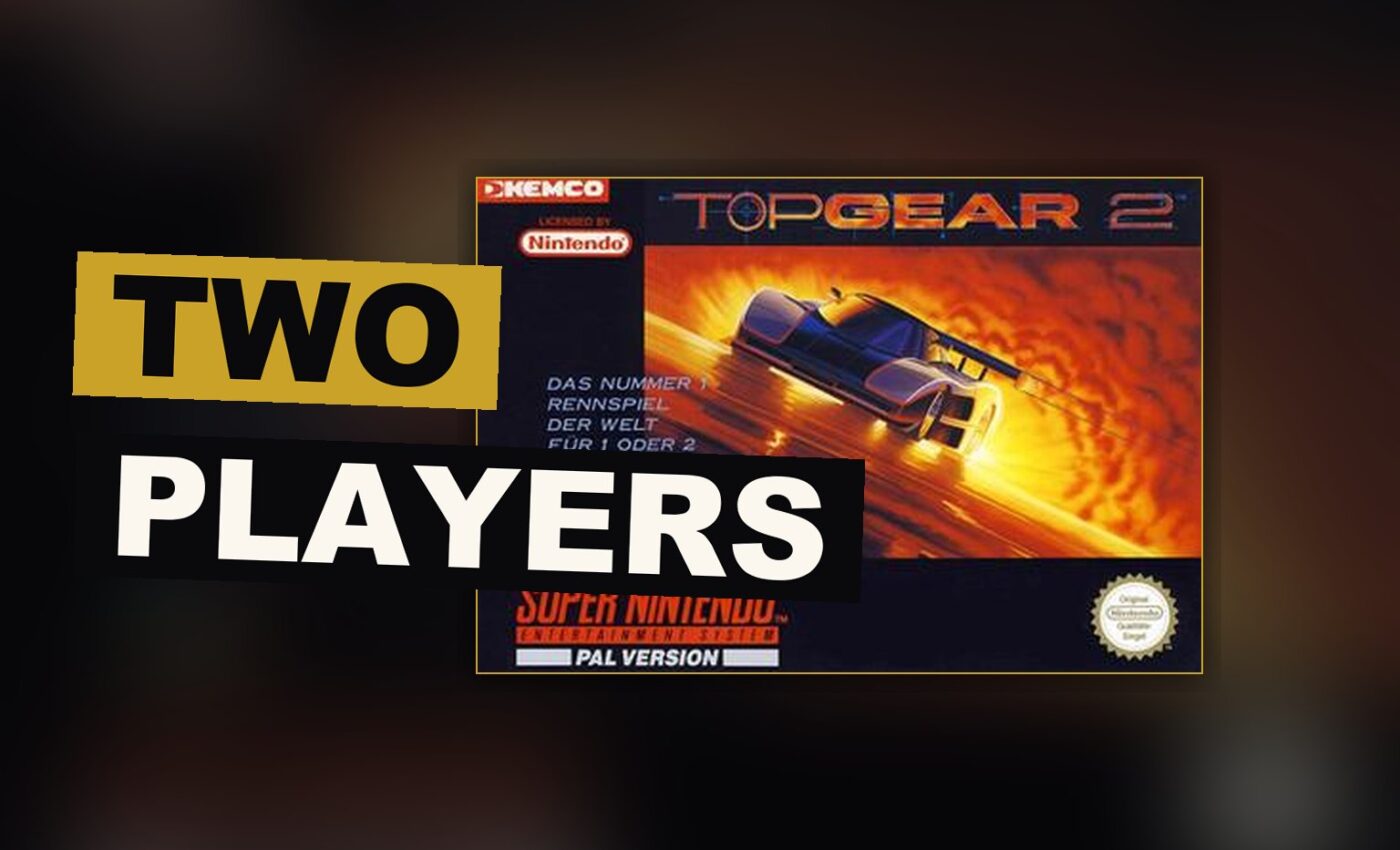
Top Gear 2 wants you to earn your speed. Gremlin Interactive’s sequel to the 1992 original arrived on the SNES in North America in September 1993, published by Kemco, and it does not hand a player a fast car and a clear road. It hands them a slow one, a damage diagram, and a tire budget.
64 Tracks, 16 Countries, One Password
The structure is a long haul. Top Gear 2 runs across 64 tracks in 16 countries, four races per country, starting in Australasia and ending in the United States. Finish in the top 10 of a race to qualify for the next. Points go 10-6-4-3-2-1 to the top six, with money paid out in thousands alongside.
Win a country’s four-race block and the game hands over a password, which is how you pick the run back up later. Lose the thread and you start over. That password is the whole save system, and it makes every country a small championship you either close out or repeat.
Monza at Ayers Rock
The circuits are real-world layouts dropped into places they have no business being. The Monza layout sits at Ayers Rock. The old Hockenheim shows up in Vancouver. It is an odd choice, and it works better than it should, because the tracks stay readable even when the setting is nonsense.
Gremlin built this from the bones of its Lotus racing trilogy, reusing graphics and gameplay the way it had for the first Top Gear. The result looks like the Lotus games right down to the font. The camera sits in third person. Single player, multiplayer, and split screen are all here.
Weather, Damage, and the Tire Bill
What separates Top Gear 2 from its predecessor is the friction. Cars are slower and harder to handle. Opponents are faster and tougher. Weather forces you off dry tires and onto wet ones, so the upgrade screen is not decoration.
You spend race winnings on engine, tires in both wet and dry compounds, front, side and rear shocks, and gearboxes. Buy the expensive version first. Upgrading later costs the same as buying it outright, so there is no saving in waiting, and a cheap part now is money burned.
Damage runs on a diagram at the left of the screen. Destroy a section of armor, take another hit where it used to protect you, and the car spins out. Run out of fuel and you are disqualified.
Nitro, Pickups, and Puddles
Each race starts you with six nitro boosts that briefly spike the car’s speed. On the road you can find a dollar-sign pickup that pays 1,000 in cash, an N pickup that grants an extra nitro, and an S pickup that fires automatically on pickup and returns every lap. The cash and nitro pickups are one-time only.
Hazards are constant: puddles, barriers, ramps. A map shows the course layout, your position, and the position of the car in first.
| Element | Top Gear (1992) | Top Gear 2 (1993) |
|---|---|---|
| Handling | Arcade, looser | Slower cars, harder to hold |
| Opponents | Standard | Faster and tougher |
| Damage | Not tracked by diagram | Diagram on left of screen |
| Weather | Absent | Forces dry-to-wet tire swaps |
| Upgrades | Not available | Engine, tires, shocks, gearboxes |
| Tracks | Not stated | 64 across 16 countries |
What the Naming Rights Bought
One detail deserves a mention for how baldly it sits in the game. Because of an agreement over naming rights, the Giza Necropolis in Egypt was renamed Hugh Sitton, after a photographer for Corbis Corporation. A landmark older than most countries is now a photo credit. It is the funniest thing in Top Gear 2, and it is not trying to be.
The Grind Is the Improvement
Top Gear 2 is a racing game that respects the grind. The 64-track run is long, the password system is unforgiving, and the upgrade economy punishes anyone who buys cheap. That is the point. Gremlin took the arcade feel of the first game and added consequence: worn tires, cracked armor, a tank running dry.
The cost is accessibility. Slower cars and tougher opponents mean the early countries can feel like work, and a spin-out from a destroyed armor section will read as unfair before it reads as a lesson. Players who want the Lotus-style pick-up-and-drive will find the sequel has grown a spreadsheet.
But the spreadsheet is the improvement. Weather that forces a tire change, damage that actually ends your race, and upgrades that reward planning over reflex — these are the reasons Top Gear 2 holds up better than a lot of its era. The Monza-at-Ayers-Rock absurdity is noise. The tire bill is the game.
Key Facts
– Released on the SNES in North America in September 1993, published by Kemco
– Also released as Top Racer 2
– Super Famicom release: December 22
– Later ports: Amiga and Amiga CD32, September 1994; Sega Genesis, September, by Vic Tokai
– Tracks: 64 across 16 countries
– Grid: 19 opponents per race
– Points: 10-6-4-3-2-1 to the top six
– Starting nitro: 6 boosts
– Cash pickup: 1,000
– Published critical score: 7.3/10 (IMDb)
Get the Notebook.
The day's best stories and every fresh verdict, in plain English, in your inbox by seven. One email a day, no more.