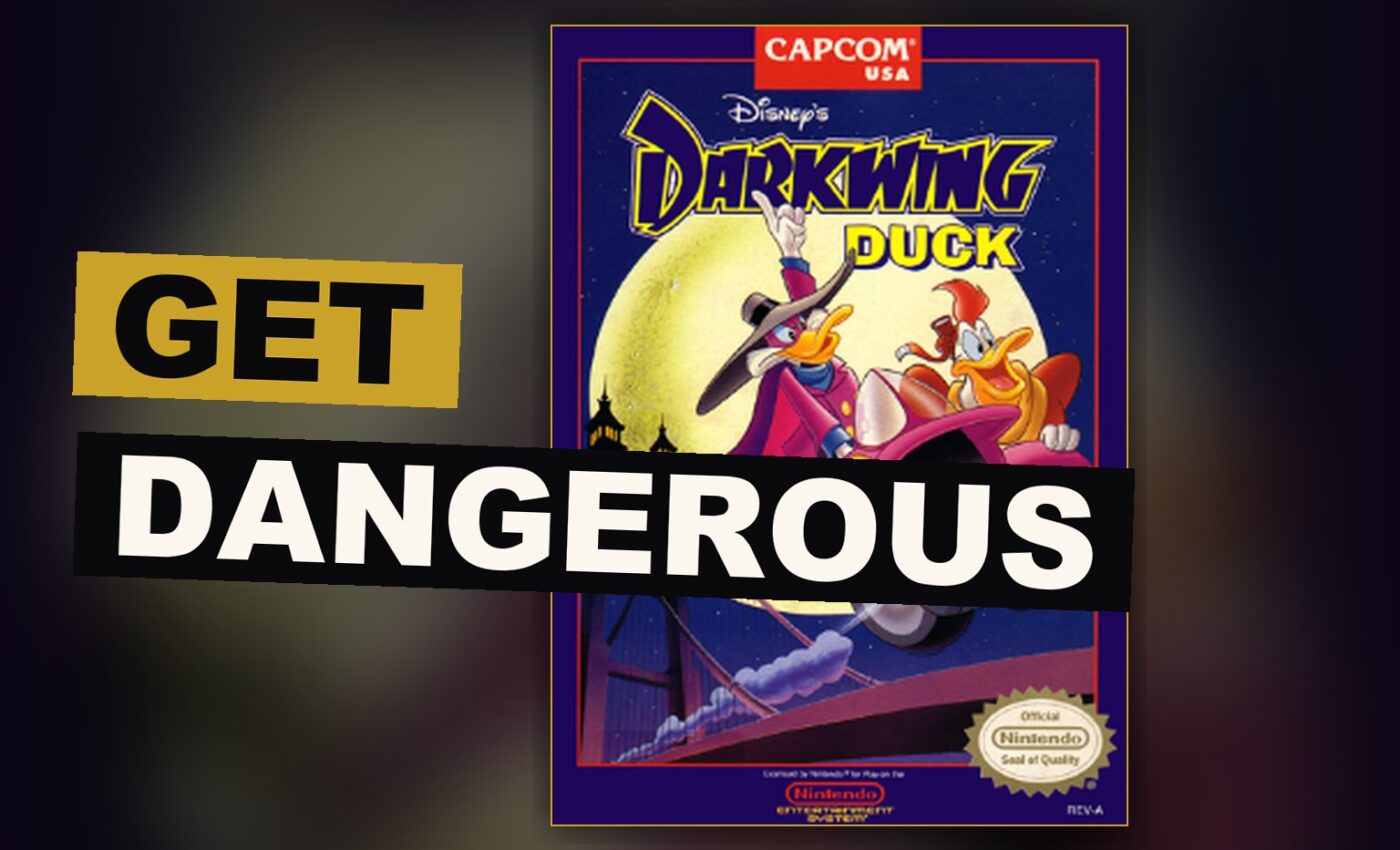
Darkwing Duck brings Capcom’s platforming skill to a masked hero from his home city, and the result holds up as a solid, difficult NES outing. Players guide Darkwing through the streets, gas gun in hand, facing familiar villains from the show. The game depends on tight controls and hard enemy position within its stages rather than story or spectacle.
Stage Design and Difficulty
The level design rewards patience and repeat attempts. Enemies appear in tight groups, and hazards often sit just past a blind space, forcing players to learn each stage through repeated failure. That difficulty will frustrate some players and satisfy others who want a real test.
Darkwing’s gas gun offers a limited supply of gas types, and managing that supply becomes part of the challenge. Choosing the wrong gas for a boss fight can turn a short fight into a long one. The game does not explain its systems clearly, so players work out combinations through trial and error.
Presentation and Sound
The character sprites show the look of the show well, and Darkwing’s animations carry personality even within NES limits. The scenery behind each stage is plain and repeats often across several stages. Music fits the cartoon tone without standing out as a chief point of the NES library.
Boss fights demand study of enemy manner more than quick hands. Each boss has a rhythm, and players who study it can beat a fight quickly once they know the timing. Learning that timing without prior knowledge often costs several lives.
Here is a breakdown of the stage order and the enemies encountered during play:
| Stage | Setting | Chief Foe |
|---|---|---|
| 1 | City roofs | Foot soldiers |
| 2 | Warehouse district | A foe with a metal bill |
| 3 | Museum | Electric villain |
| 4 | A works filled with machines | A villain built like a toy |
| 5 | Final approach | Dark rival |
Value Over Time
Once a player has learned the stage design and boss manner, later playthroughs go faster. The core appeal rests on skill built through repetition, not on seeking out new ground. There are no branching paths or secret endings to draw players back for a second look, but the challenge itself holds up on repeat plays.
“Once a player has learned the stage design and boss manner, later playthroughs go faster.”
Some players may find the difficulty great at the start. That difficulty grows smaller as the stages become known to the player. Still, the game asks a fair amount of trial and error before it opens up.
Darkwing Duck asks a lot of patience early on but pays that patience off with a satisfying rise in skill, so to speak, for players who stick with it. It is not the most forgiving platformer on the NES, and it is not the most striking to look at, but it turns its source material into a game that respects the player’s skill over knowledge of the show. Longtime viewers of the character will find plenty to like here, and those new to the show who are willing to learn its rules will find a fair, if demanding, challenge.