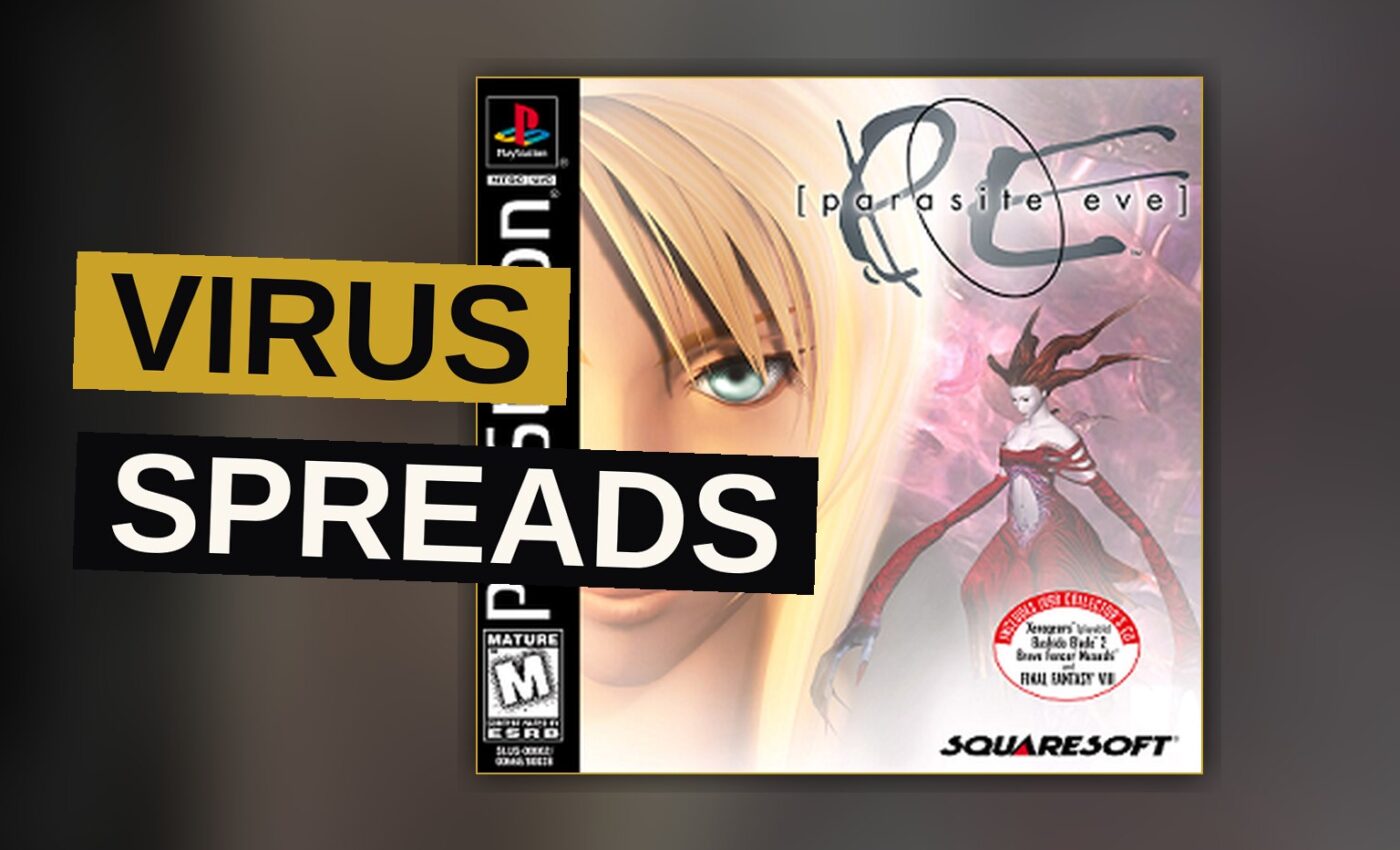
Parasite Eve arrived on the original PlayStation in 1998, and it did something no other Square game had done before: it handed a role-playing engine to a horror story and let the two fight it out. Square developed and published it. It is the first game in the Parasite Eve series and a sequel to Hideaki Sena’s novel. It is also the company’s first M-rated title, and its first major American and Japanese development collaboration.
It works. Not perfectly, but often brilliantly.
Aya Brea and the Carnegie Hall Fire
The game opens on December 24th, 1997. Aya Brea, an NYPD rookie, is at Carnegie Hall on a date when the audience begins to spontaneously combust. The lead actress, Melissa Pearce, survives — and then confronts Aya onstage, telling her that Aya’s mitochondria need more time to develop. Melissa flees backstage, mutates into a beast, and escapes into the sewers, declaring her name is now Eve.
That is a hell of an opening. Square does not waste it. The story runs across six days, each one a new set of revelations, as Aya works to stop Eve from destroying the human race and creating a new dominant species. She is helped by scientist Kunihiko Maeda and NYPD detective Daniel Dollis. Along the way she learns the truth about her own physiology.
The plot is nonsense in the best way. Mitochondria as the engine of human combustion and the birth of a rival species is a premise that should collapse under its own weight. It does not, because the game commits to it completely.
Pausable Real-Time Combat and the Active Time Bar
Parasite Eve’s director, Takashi Tokita, called the game a “cinematic RPG.” That is the right phrase. Movement on the world map, a map of Manhattan, is limited to specific destinations. Walk over a hot spot and a random encounter may fire. Enemies materialize on the same screen you move Aya around on — there is no separate battle screen.
Combat uses a pausable real-time system with an Active Time Bar. The bar sets how long until your next action. While you wait, you can move Aya to dodge attacks. On your turn you can attack, spend Parasite Energy on defense, assistance or attack, use items, change weapon or armor, or run.
Parasite Energy recharges during battle, but the more you use it, the slower it refills. That single rule does more for tension than most horror games manage with an entire bestiary.
Attack briefly pauses the fight and shows a dome marking your weapon’s range. You pick a target inside it. Outside of battle, you alter weapon and armor attributes with tools and super-tools.
| System | Parasite Eve | Final Fantasy VII | Resident Evil |
|---|---|---|---|
| Combat | Pausable real-time with ATB | Turn-based with ATB | Real-time with fixed aim |
| Movement in battle | Free, for dodging | Limited to the battle screen | Free, limited |
| Battle screen | None — same screen | Separate | Same screen |
| Structure | Six days, Manhattan | Disc-based overworld | Mansion, fixed rooms |
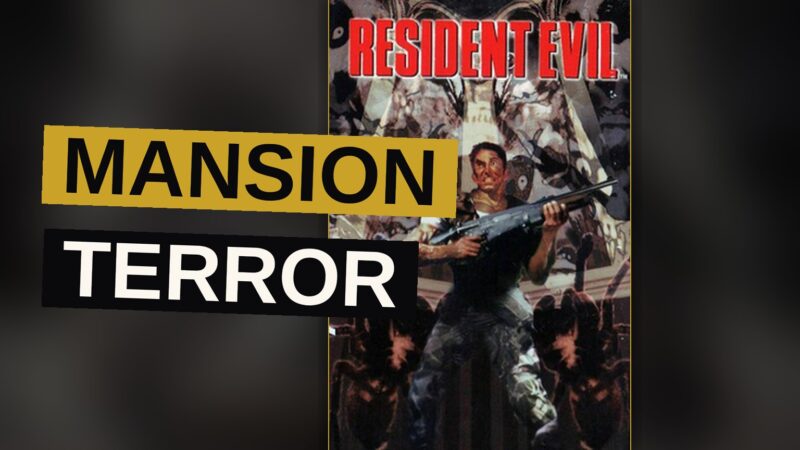
GameSpot and Official U.S. PlayStation Magazine both described Parasite Eve as a hybrid of Final Fantasy VII and Resident Evil. That comparison holds up. The ATB is Final Fantasy’s. The dread is Resident Evil’s. The combination is Square’s own.
Yoko Shimomura’s Inorganic Score
Yoko Shimomura composed the music, and she was widely acclaimed for it. Her goal was a soundtrack that felt “inorganic” and “emotionless” — a strange brief for a horror game, and exactly the right one. The score saw two album releases.
It is the part of Parasite Eve that has aged best. Where the graphics carry 1998 written all over them, the music still sounds like nothing else from that era.
The Numbers Behind Square’s First M-Rated Game
- Released: 1998
- Developer and publisher: Square
- Platforms: PlayStation, PlayStation 3, PlayStation Portable
- Director: Takashi Tokita
- Producer: Hironobu Sakaguchi
- Composer: Yoko Shimomura
- Rating: M — Square’s first
- Setting: New York City, six days, December 1997
- Re-released on PlayStation Network: 2010
- Score: 8.1 of 10
What the Six Days Get Right, and What They Don’t
The structure is the game’s biggest liability. Six days in Manhattan sounds generous. In practice it is a corridor. Movement is limited to specific destinations on the map, and the game rarely lets you wander. Critics at the time praised the graphics and gameplay but found Parasite Eve too linear, with little replay potential. That complaint was fair then and it is fair now.
The game also carries the era’s load times and the era’s pacing. The random encounters can wear you down. The puzzle-solving and exploration are thinner than the RPG systems suggest.
None of that kills it. Parasite Eve was part of a resurgence of Japanese horror sparked by Sena’s novel, and it released alongside a film adaptation and two manga — one based on the book, one on the game. The original was followed by Parasite Eve II in 1999 and The 3rd Birthday in 2010. The first game is still the one that matters.
What makes Parasite Eve worth returning to is not its length or its freedom. It is the confidence. Square took a horror novelist’s premise, bolted it to a combat system nobody had tried, hired a composer to write music that felt deliberately cold, and shipped it as an M-rated game when that was a genuine risk for the company. The result is a game that feels like an experiment that happened to land.
The linearity is real. The replay value is thin. Neither is the point. Parasite Eve is a cinematic RPG in the truest sense — six days, one city, one officer, and a monster who used to be a soprano. It earns its place as a classic of survival horror, and it earns it on atmosphere and nerve rather than on scope.
Get the Notebook.
The day's best stories and every fresh verdict, in plain English, in your inbox by seven. One email a day, no more.