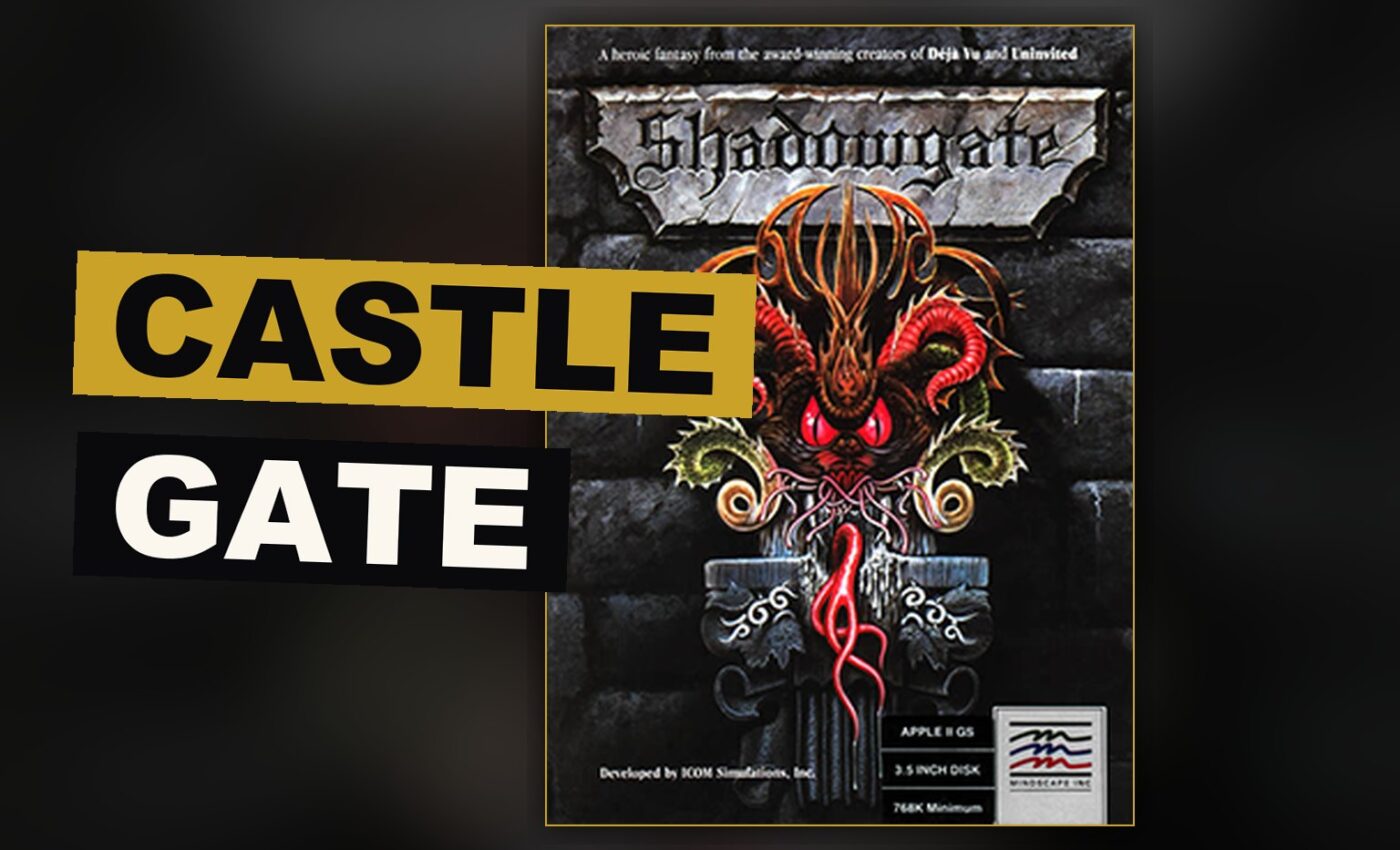
Shadowgate puts players inside a castle ruled by dark magic, working to stop an ancient evil before it wakes and destroys the world. The NES version, issued in 1989, wraps that quest in dark art and one of the platform’s harsher death counts.
It is not a fast game.
It rewards patience, careful thought, and a willingness to fail often.
A Castle Built From Still Images
Every room in Shadowgate is a still picture, painted in shadow and lamp light. Players move between rooms by choosing commands from a list — look, take, open, use — rather than guiding a character directly on screen. The list is simple to read but takes time to work through, and it can feel awkward next to other NES games built around quick reactions.
That steady pace fits the game’s dark mood. Shadowgate wants players to stop and look at objects, read the short text describing them, and think before acting.
Death Waits at Every Turn
Shadowgate is known, and sometimes criticized, for how easily a player can die. A small flame burns out and darkness kills. The wrong object springs an unseen danger. A creature appears without warning and ends the game in seconds.
These deaths rarely feel harsh once explained, but they often feel harsh in the moment. The game does not warn players before failure; it simply shows the result and lets them begin again. That design pushes players to learn from repeated failure rather than pure logic, and it is the biggest point critics raise against Shadowgate.
Watching the Flame Burn Down
Managing lamp light is the closest thing Shadowgate has to a constant clock. Each flame burns down at a set pace, and running out drops the player into instant death. This forces a rhythm on the search through the castle: check what is carried, watch the flame, move with purpose.
A Look at the Order of Play
The table below sketches a rough order of major rooms and dangers a player is likely to meet while working through Shadowgate. It is not a strict guide, only a shape of the pace.
| Stage | Room | Main Danger |
|---|---|---|
| 1 | Castle Gate | Locked doors, early unseen dangers |
| 2 | Great Hall | Care of the flame begins |
| 3 | Library | Puzzle items, secret clues |
| 4 | Lower Halls | Sudden creature meetings |
| 5 | Final Chamber | Last battle with the castle’s ruler |
Sound and Quiet
Shadowgate’s music is thin, often silent, letting the sound of falling water or a distant cry carry a scene instead. That quiet approach suits the castle setting. When a musical note does play, usually to mark death, it lands harder because of the quiet around it.
Words That Carry the Weight
Because there is no voice acting and little animation, Shadowgate relies on its written descriptions to build mood. The writing is short and plain rather than fine, but it does the job of telling players what a room holds and why it matters.
Shadowgate is not built for players who want constant motion. It rewards careful thought, memory, and close reading of item descriptions. Players who enjoy that kind of steady, careful progress will find a rich puzzle design within the deaths that teach through failure.
Shadowgate remains a well known NES experience: dark, occasionally frustrating, and unlike most fast games on the system. Its harsh deaths and more deliberate interface keep it from greatness, but its puzzle design and mood have earned it lasting attention from adventure game followers.