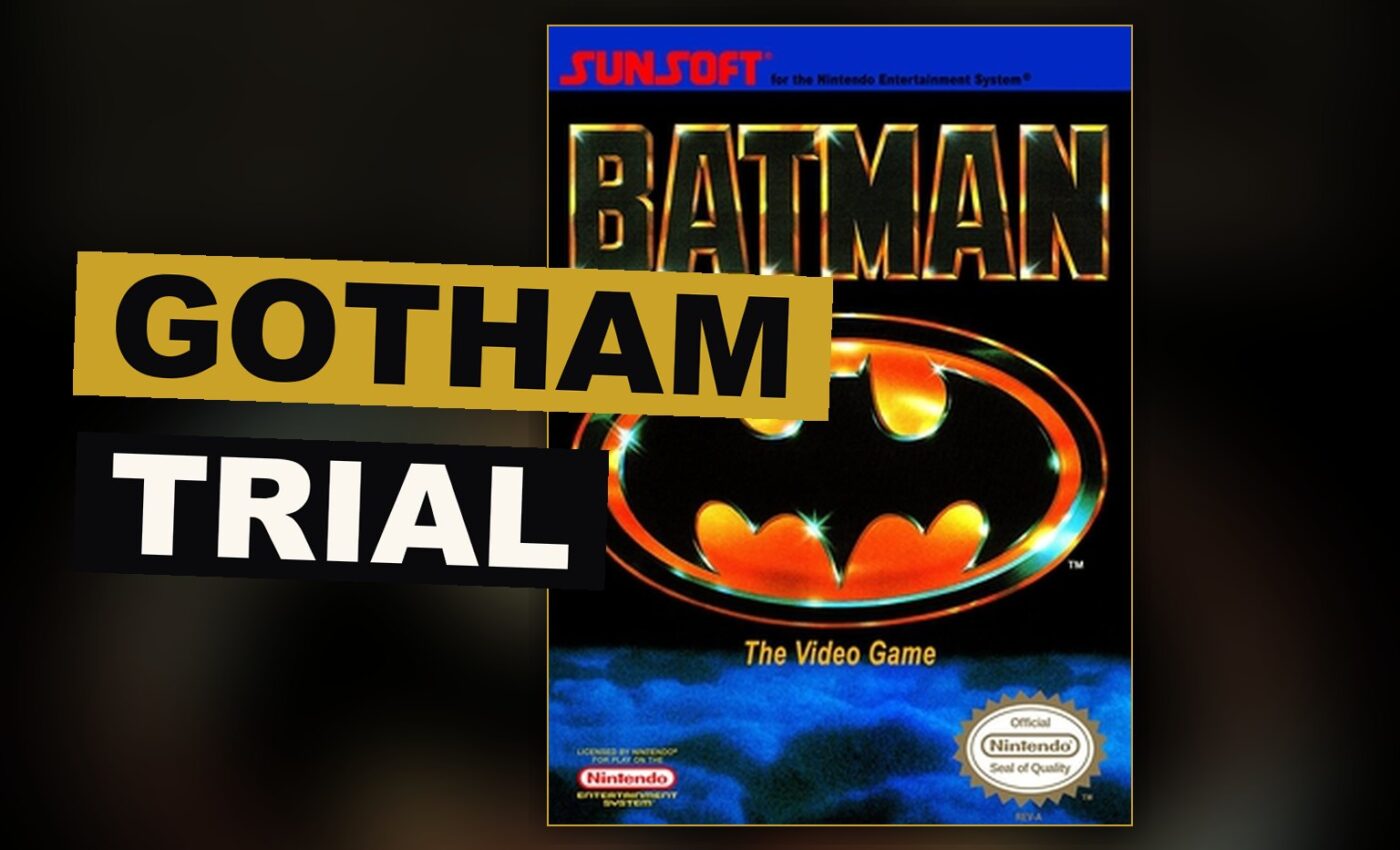
Batman: The Video Game came to the NES and gave players a tight, forceful game built around Batman himself. It runs and moves through five stages built around careful timing and steady enemy waves. The game uses its pictures and its music to carry a simple mission: fight through Gotham City, stop the Joker.
Look and Sound
The character drawing stands out first. Batman’s cape moves as he runs, and the motion gives him real weight when he lands a blow or drops from a height. The scenes behind him change from city tops to inner rooms of stone and metal, each drawn with fine care for the machine of its time. The music behind every stage drives hard, and many players still name it as one of the best parts of the whole NES library. The sound and the pictures work together, so the game feels whole even in its smallest moments.
Fighting and Getting Around
Batman fights with a close blow and a thrown object, and switching between them takes practice under pressure. Enemies come fast, and the game does not wait for a player to get ready.
Batman can move from wall to wall to pass through narrow passages, giving him a way of getting around tight quarters that few other action games on the system tried in the same way. The controls feel true once learned, though the path to learning them well is not an easy one. Players who take the time to master this motion find much of the game opens up that once seemed closed off.
How Hard It Gets
Batman: The Video Game does not ease players in.
Early stages already ask for careful timing and quick hands, and later levels raise the stakes with tighter enemy groups and less room for error. Deaths pile up fast for those new to the game, and second chances are few. Some players call this balance fair, saying the game rewards study and patience. Others call it too hard to bear at times, most of all in parts where enemies appear with little warning. The difficulty does not let up once it starts, and there is no easy part to catch a breath in.
The Five Stages
The five stages each carry their own look, moving Batman from open city tops to close inner passages before the last fight with the Joker.
| Stage | Setting | Main Test |
|---|---|---|
| 1 | Gotham City tops | Timed moves across open air |
| 2 | Halls of metal and stone | Narrow paths, heavy enemy count |
| 3 | A place full of danger and bad air | Hazards on the ground, careful steps |
| 4 | Path toward the Joker’s secret base | Waves of enemies close together |
| 5 | The last fight | Battle against the Joker himself |
Each stage builds on what came before, and the game rarely repeats a trick once a player has learned it. By the final stage, every skill asked of the player in earlier levels comes together at once.
What Stayed Behind
Batman: The Video Game left its mark well beyond its first year in stores. It still comes up often when people talk about the finest games ever built from a film. Those who love it point to its music and its fine drawing as reasons it has held up better than most games made from a movie name. Its place among such games rests less on its story and more on how well its parts fit together.
The game asks a lot of its players, but it gives back with style, sound, and a real sense of drive once its parts come together. Batman: The Video Game is not the simplest starting point for those new to the NES library, and its harsh difficulty will turn some players away before they reach the final stages. For those willing to push through, it stands as one of the finer action games the machine ever held, built on strong music, fine drawing, and level design that still holds up years later.