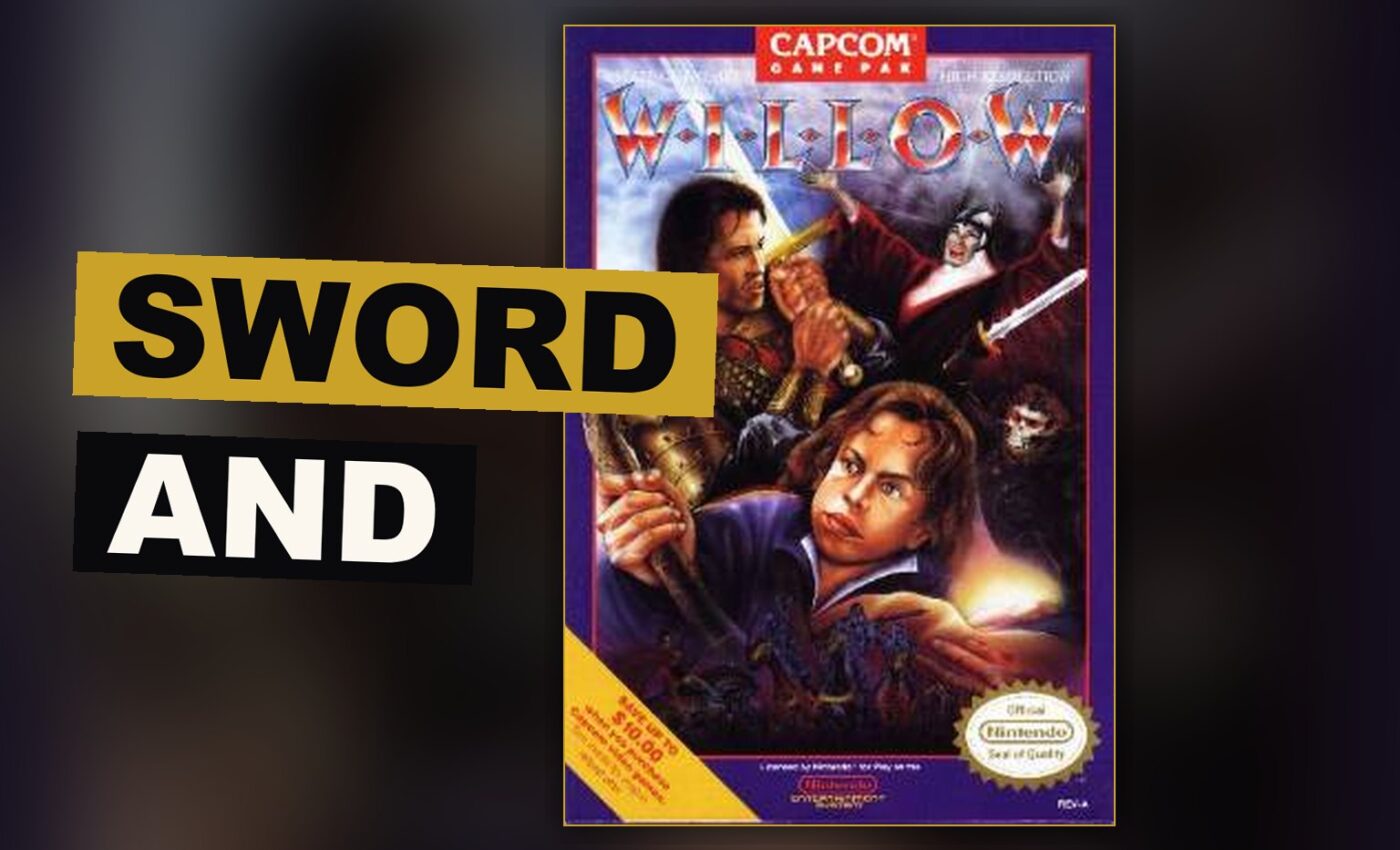
Willow brings the 1988 fantasy film to the NES, and the result is a game that mixes fighting and character building in a way that mostly works well together.
The Setup
Willow follows the film’s story in broad terms. Players guide the hero through woods, villages and secret rooms, fighting monsters with a sword and magic. The game builds on ideas common to games of its time: an experience system, item shops and a world to search.
Fighting and Magic
The fighting is simple but solid. Enemies come at a steady pace, and the sword strike has good reach. Magic spells add variety once players earn enough experience to cast them. Cures and other items help keep the hero alive through hard moments in the game.
- Sword attacks for close fighting
- Distance magic spells for harder enemies
- Experience points that give new abilities
- Shops for buying gear and cures
- A password system for saving progress
Game Design
Willow plays from a view looking down on the hero throughout, guiding him across fields, forests and dungeons in the manner common to games built around searching and character building at that time. It keeps the pacing quick, and this design is one of the clearer points of comparison to other games built the same way.
Some players may find the difficulty hard in later parts of the game. Building up experience becomes needed to get through certain boss fights. The game does not explain much beyond a password screen, so players must learn its rules mostly through trial and error.
Here is a general sense of how the game’s challenge builds over time, though exact difficulty may vary by player:
| Stage | Main Setting | Difficulty | Notes |
|---|---|---|---|
| Early game | Village and fields | Easy | Simple enemies, simple gear |
| Mid game | Forest and caves | Moderate | New enemy types appear |
| Late game | Castle and secret halls | Hard | Boss fights favor higher levels |
| Final stage | Enemy fortress | Very hard | Rewards full gear and spells |
Sound and Graphics
The music holds up well, and the score fits the fantasy mood of the film. Character sprites are detailed for the time, and the settings show a good variety of color and design work.
Animation is limited but good, matching most other NES games made around the same time. Small touches, like the way spell effects brighten across the screen, add a bit of polish to otherwise plain looks for the period.
The care given to sound stands out. Music changes between the wide fields beyond the villages and the fighting screens, giving each part of the game its own mood.
How It Compares
Willow sits alongside other NES games drawn from films of its period, though it sets itself apart with its design, built around experience points, magic and a fuller world to search.
Most games drawn from films at that time relied more on simple fighting as the hero moved left and right across the screen. Willow’s choice to build out a fuller system of building up the hero and searching is unusual for its kind, and it gives the game a sense of depth that others of its type often lack. The tie to the film’s story is loose rather than exact, but the heart of the story and its people carry through clearly.
Those who love the film may notice missing scenes and characters, since the game trims much of the tale down to make room for its fighting and searching parts.
Final Thoughts
Willow does not reach the heights of the best NES games built around character building and experience, but it delivers a solid, sometimes clever experience for those who love the film and this kind of game. The mix of searching and fighting keeps things fresh even when the difficulty grows hard.
It holds a 7.2 out of 10 rating on IMDb, reflecting the general opinion of viewers and players who have rated the game over time.