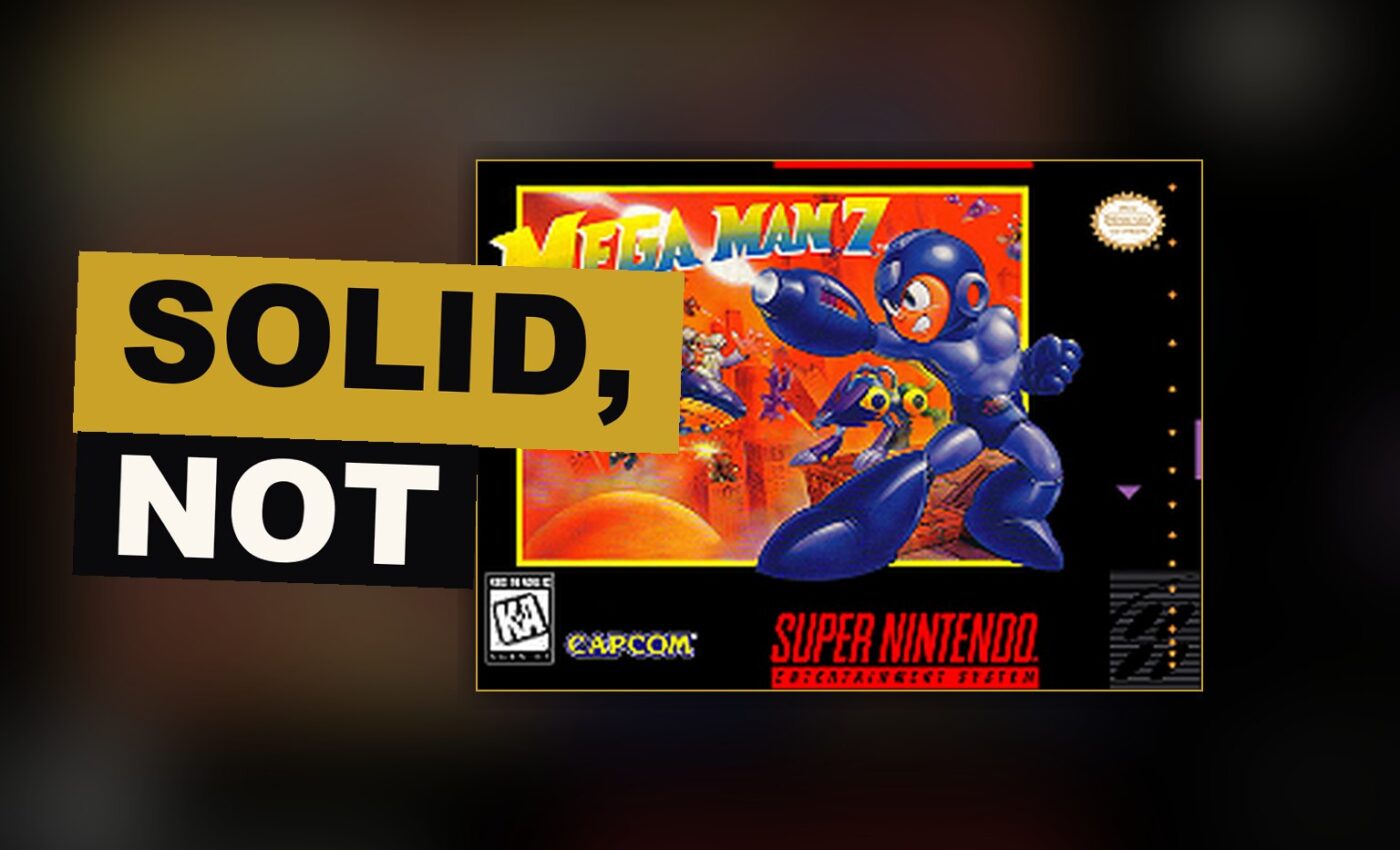
Mega Man 7 arrived on the Super Nintendo Entertainment System in 1995 with a problem it could not solve. The Blue Bomber had run six deep on the NES, and the series had already jumped forward with Mega Man X on the same console more than a year earlier. Capcom’s answer was a straight sequel with sharper graphics and sound — no reinvention, just a bigger canvas. The result is a competent, familiar game that plays it safe, and 6.9 of 10 is about right for it.
A Six-Month Jump From Mega Man 6
The story picks up six months after Mega Man 6. Dr. Wily is finally in custody, but he had planned for that. Four backup Robot Masters — Burst Man, Cloud Man, Junk Man and Freeze Man — sit in a hidden lab, programmed to activate and search for their master if they hear nothing for six months. They wake up, raise an army and tear through the city holding Wily. Mega Man arrives too late to stop the breakout.
The plot then introduces Bass, a robot with abilities much like Mega Man’s own, and his wolf companion Treble. After a brief skirmish, Bass claims he is fighting Wily too. Mega Man leaves convinced he has new allies. That trust does not hold. Bass later turns up injured, gets sent to Dr. Light’s lab for repairs, and repays the kindness by going berserk, wrecking the lab and escaping with parts for new enhancements.
Four Robot Masters, Then Four More
Gameplay follows the template of the first six games. The player runs side-scrolling stages that end in a boss fight with a Robot Master, and each defeated boss yields a Master Weapon that works in every later level. Each Robot Master is weak to one specific weapon.
Mega Man 7 changes the order. Only four stages are open at the start — Freeze Man, Junk Man, Burst Man and Cloud Man. The other four — Spring Man, Slash Man, Shade Man and Turbo Man — unlock after those are cleared. Sliding, the chargeable Mega Buster and Rush all return.
The additions are modest. Rush Search makes the dog dig up items wherever the player stands. Certain levels hide the letters R-U-S-H, and collecting them grants the Rush Super Adaptor, which combines two Mega Man 6 enhancements with a rocket-arm attack and a jetpack. Enemies drop extra lives, health and weapon refills, and special bolts. Those bolts get spent at Eddie’s Cybernetic Support Shop, run by Dr. Light’s new lab assistant Auto — a system borrowed from the Game Boy Mega Man titles.
Where Mega Man 7 Sits Against the Series
| Feature | Mega Man 7 | Earlier NES Mega Man games |
|---|---|---|
| Starting stage selection | Four Robot Masters open at once | All stages selectable from the start |
| Platform | Super Nintendo Entertainment System | Nintendo Entertainment System |
| Graphics and sound | Updated for the more powerful hardware | 8-bit |
| Bolt shop | Eddie’s Cybernetic Support Shop, run by Auto | Debuted in the Game Boy titles |
| Rush Super Adaptor | Rocket-arm attack and short-range jetpack | Two separate Mega Man 6 enhancements |
The Numbers Behind the Release
- Release: Japan, March 24, 1995; North America and Europe later that year
- Developer and publisher: Capcom
- Platform: Super Nintendo Entertainment System
- Series position: seventh game in the original Mega Man series
- Critical score: 6.9 of 10
The Formula Had Gone Stale
Reviews at the time landed mixed-to-positive. Many critics called Mega Man 7 a competent game on its own terms and still knocked it for not innovating. The comparison to Mega Man X, which shipped on the SNES over a year earlier and did far more with the hardware, was the one that stuck.
That criticism holds up. The SNES gave Capcom room for bigger sprites, better sound and more on screen, and Mega Man 7 uses that room mostly to redraw what already existed. The four-then-four stage split is the one structural change, and it is a scheduling tweak, not an idea. The bolt shop is imported from the handheld line. The Rush Super Adaptor is two older upgrades bolted together.
The development story explains some of it. According to its creators, Mega Man 7 was only in development for a short time before release, and Keiji Inafune handed his duties to Hayato Kaji for this installment. A short schedule shows in a game that trusts the blueprint.
None of that makes Mega Man 7 bad. The core loop still works — tight platforming, readable boss weaknesses, a weapon set worth collecting. Bass and Treble give the plot a real turn rather than a placeholder, and the six-month gap from Mega Man 6 gives the story a reason to exist. The game is solid. It is just the installment where the original series stopped being the place where Mega Man moved forward.
The bolts-and-shop system is the detail worth watching. It debuted on Game Boy, appeared here, and became standard for the core titles afterward. Mega Man 7’s legacy is less about what it did and more about what it passed along.
Get the Notebook.
The day's best stories and every fresh verdict, in plain English, in your inbox by seven. One email a day, no more.