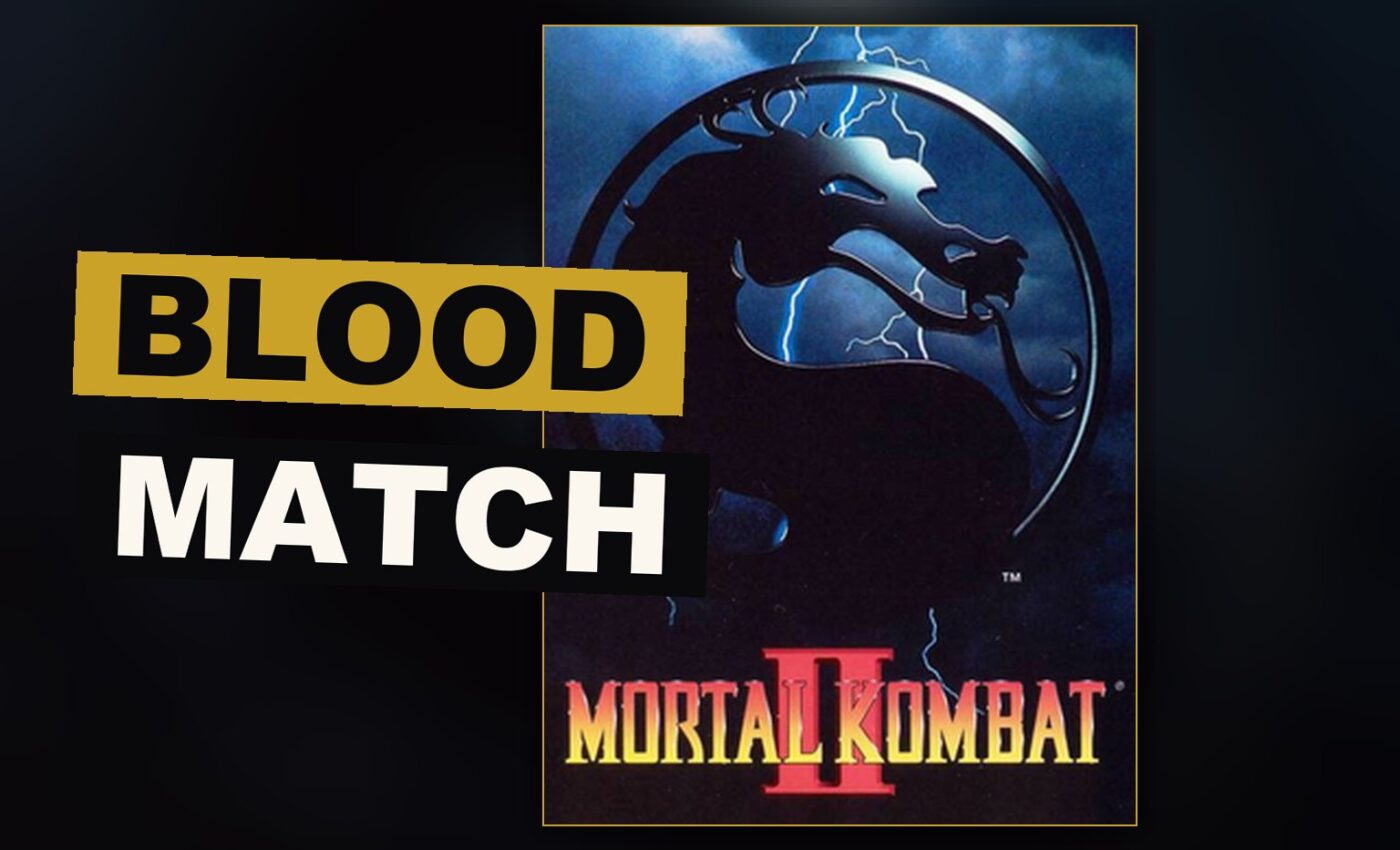
Mortal Kombat II hit arcades in 1993 and changed the fighting game for good. Midway developed and published it, then handed home ports to Probe Software and Sculptured Software, with Acclaim Entertainment publishing. This review covers the Super NES version, which scores 9.0/10.
A Pirate Port Shares the Name
The title is not unique. A 1994 Family Computer game also called Mortal Kombat II was made by Cony Soft, listed here as Yoko Soft, and it is a pirated port of the original Mortal Kombat, not a port of this sequel. It is a separate release and is not the game reviewed here. The 9.0/10 applies to the Super NES version of Midway’s Mortal Kombat II.
Shao Kahn Takes the Home Field
The plot picks up right after the first tournament. Shang Tsung, beaten by Liu Kang, begs his master Shao Kahn for his life. He argues that if the next Mortal Kombat is held in Outworld, the Earthrealm warriors must travel away from home to compete. Kahn agrees, restores Shang Tsung’s youth and martial arts skill, and extends the invitation to Raiden.
Raiden gathers his warriors and takes them into Outworld. Shao Kahn has the home field advantage, and the tournament is far more dangerous for it. Canon says Liu Kang won this one too, beating Shao Kahn and his bodyguard Kintaro. Every other playable character gets a non-canonical ending.
Baraka, Jax and Kung Lao Join the Roster
The roster runs 12 playable characters. Baraka, played by Richard Divizio, is a mutant warlord of Outworld’s Nomad race. Jax, played by John Parrish, is a U.S. Special Forces officer hunting for his partner Sonya Blade. Kitana, played by Katalin Zamiar, is Kahn’s personal assassin, suspected of secretly helping the Earthrealm side. Kung Lao, played by Anthony Marquez, is a Shaolin monk descended from the Great Kung Lao, beaten by Goro and Shang Tsung 500 years earlier.
Mileena, also played by Katalin Zamiar, is Kitana’s twin and another Kahn assassin. Returning fighters include Johnny Cage (Daniel Pesina), Liu Kang (Ho Sung Pak), Raiden (Carlos Pesina), Reptile (Daniel Pesina), Scorpion (Daniel Pesina), and Shang Tsung (Philip Ahn, M.D.). The game also establishes that Scorpion killed the original Sub-Zero, Bi-Han, in the first game, and that Bi-Han’s younger brother Kuai Liang took the name.
Babalities, Friendships and Stage Fatalities
The fighting system is a sharpened version of the original. A crouching punch was added. Low and high kicks are better differentiated. Roundhouse kicks now knock an opponent across the screen. Combos are easier because attack recovery times were cut. Returning characters gained new special moves, some usable in mid-air.
The game plays almost twice as fast as the first Mortal Kombat. Matches still run on rounds, first to two wins by draining the life bar. The loser stands dazed, and the winner gets a finishing move. Gone are the “Test Your Might” bonus games and the point system, replaced by a consecutive win tally shown as icons.
Mortal Kombat II introduced multiple Fatalities per character. It also added non-lethal finishers: Babalities turn the opponent into a crying baby, and Friendships are harmless interactions like dancing or handing over a gift. Stage-specific Fatalities let a victor uppercut an opponent into spikes, an abyss, or a pool of acid. Finishing moves cannot be used by or against boss and secret characters.
What the Super NES Port Gets Right
The Super NES version keeps the speed that defines Mortal Kombat II. That speed is the whole point of the sequel. The first game was a curiosity; this one is a system. The new finishing moves gave players a reason to keep picking different fighters, and the expanded roster gave them somewhere to go.
The violence controversy followed the game everywhere, and it still does. That argument was never really about the game. It was about what games were allowed to be. Mortal Kombat II answered by being better than its reputation.
What separates this sequel from every clone it inspired is the joke underneath the gore. Babalities and Friendships exist because Midway understood exactly how absurd the whole thing was, and built that understanding into the machine. The SNES port carries the arcade’s pace and its mean streak without apology.
The naming clash is the detail worth watching. A pirate cart from 1994 shares a title with one of the best fighting games ever made, and the two have nothing else in common. Buyers hunting the real thing should check the platform and the publisher before anything else.
KEY FACTS BOX
- Release: 1993, arcades (Midway)
- Home ports: Probe Software and Sculptured Software, published by Acclaim Entertainment
- Platform reviewed: Super NES
- Score: 9.0/10
- Playable characters: 12
- Pirate port: 1994 Family Computer game by Cony Soft (Yoko Soft), a pirated port of the original Mortal Kombat
Get the Notebook.
The day's best stories and every fresh verdict, in plain English, in your inbox by seven. One email a day, no more.