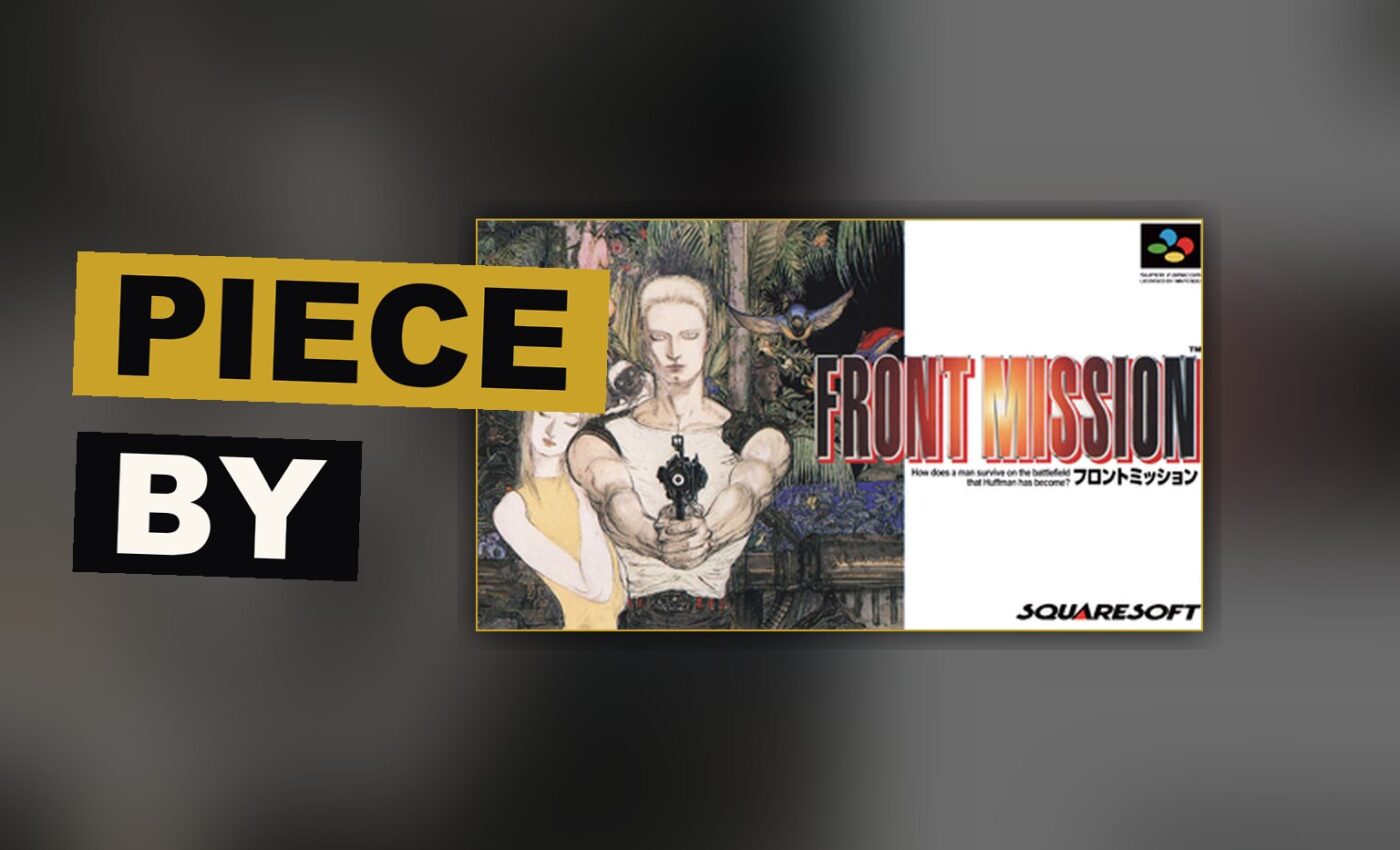
Front Mission arrived on the Super Famicom on February 24, 1995, published by Square and developed by G-Craft, and it never left Japan. That fact alone has shaped how the game is remembered. It is the first entry in a serialized storyline about pilots and their mecha, called wanzers, and it set the template that later Front Mission titles would follow. It is also a tactical role-playing game that asks for patience before it gives anything back.
Huffman Island and the 2nd Huffman Conflict
The setting is Huffman Island, a fictional Pacific landmass roughly the size of Oahu, formed by volcanic activity south of Mexico’s west coast in 1995. It was ceded to United Nations control in 2002, claimed by the United States of the New Continent in 2020, and disputed by the Oceania Cooperative Union when both superpowers colonized it in 2065. War broke out in 2070, and the island was split in half. The east became OCU territory, the west USN.
The plot kicks off when an OCU reconnaissance team under Royd Clive investigates a USN munitions factory in the Larcus district. USN wanzers under officer Driscoll ambush them. Driscoll destroys the wanzer of Karen Meure, Royd’s fiancée. The battle ends with Driscoll detonating explosives inside the plant and escaping. The USN frames it as an enemy attack — the Larcus Incident — and the 2nd Huffman Conflict begins.
Royd and his team are discharged and listed as killed in action. A year later he is fighting in a wanzer arena when Guri Olson, commander of the Canyon Crows mercenary group, recruits him with the promise of avenging Karen. The Crows start with Natalie Blakewood, Keith Carabell, Joynas “JJ” Jeriaska and Ryuji Sakata. Royd can recruit others, including war journalist Frederick Lancaster and child soldier Yang Meihua. Meihua and her hacker friend Hans Goldwin tell Royd that Karen may be alive at Grey Rock Hospital. They arrive too late. A USN truck takes the patients, and Driscoll demolishes the hospital.
Royd Clive and the Canyon Crows
That is a lot of story, and Front Mission tells it in a fixed order. You watch cut-scene events, complete missions, set up wanzers during intermissions, then sortie for the next mission. The world map is point-and-click, and new locations appear as the plot moves. Towns and cities are where you organize your units. Battle zones become inaccessible once a mission ends.
The pacing is deliberate to a fault. Front Mission wants you to sit with each setup screen, and the game rarely rewards impatience. The plot is the engine here, not the battles.
Four Parts, One Wanzer
Combat runs on wanzers, a term for mecha derived from the German word Wanderpanzer, or “walking tank.” A wanzer has four modular parts: body, left arm, right arm and legs. Each has its own function and health bar. Legs enable movement and evasion. Arms are needed for hand and shoulder weapons. The body maintains operability.
Destroy the body and the wanzer leaves play completely. Destroy an arm or leg and the wanzer stays in, but crippled: no weapon use, or movement slowed to a single space. That distinction carries the whole game. It rewards targeting, not brute force.
The Case for Shooting the Legs First
This is the best idea Front Mission has, and it holds up better than most of what surrounds it. A tactical game lives or dies on whether its decisions feel different from one another. Here they do.
- Strip the legs to slow a wanzer to one space and control the map.
- Take an arm to remove a heavy weapon before it fires.
- Kill the body only when nothing cheaper will do.
- Save the pilot, because a disabled unit can still be repaired between missions.
The order matters, and it changes with the terrain and the enemy mix. Front Mission also throws vehicles, aircraft and mobile weapon platforms at you. Those units generally have only a body part and are much stronger than wanzers. They force a different approach entirely.
Customization Without a Manual
Between missions you customize wanzers with parts, computers, auxiliary backpacks and weapons. The player has full control. That freedom is real, and so is the mess it creates. The interface does not explain itself well, and the first few hours are spent guessing which stat actually matters.
The game trusts you to figure it out. Sometimes that confidence reads as respect. Sometimes it reads as a missing tutorial.
A 1995 Game With a 2007 Second Life
Front Mission was ported directly to the WonderSwan Color in Japan on July 12, 2002. Square Enix remade it for the PlayStation in Japan on October 23, 2003 as Front Mission 1st, adding a new USN scenario. That version was ported to the Nintendo DS with more content and released in Japan on March 22, 2007. Only the DS port, renamed Front Mission, came to North America, on October 23, 2007.
The DS version used the dual screen for battle sequences, added characters from other Front Mission titles such as Griff Burnam and Glen Duval, brought in new parts and weapons, and included nine secret missions. Forever Entertainment later developed and published Front Mission 1st: Remake for the Nintendo Switch on November 30, 2022, with ports to PlayStation 4, PlayStation 5, Windows, Xbox One and Xbox Series X/S on June 30, 2023.
That is an unusually long afterlife for a game that never shipped outside Japan on its original hardware. The remakes are the reason most players know it at all.
What Front Mission Gets Right
The modular damage system is the reason to play Front Mission, and it is the reason the series kept going. Losing an arm mid-mission is a real setback you can plan around. Losing a body is a loss you earned. Few tactical games of this era made unit damage this legible.
The story earns its place too, though it takes its time. Royd’s discharge, the false report of his death, and the Grey Rock Hospital thread give the campaign a personal stake that the map screen never quite supplies. The Larcus Incident is a clean piece of world-building: one ambush, one frame-up, one war.
Where It Drags
The linear structure is the problem. Watch, deploy, fight, repeat. Missions become inaccessible after completion, so there is no going back to grind or explore. The intermission screens are dense and the customization system is opaque. Players who want to be taught will be frustrated.
The original Japanese-only release also means the 1995 Super Famicom version is the least accessible one, and the version most often cited. The DS port and the later remakes are where the extra content lives. That is worth knowing before you start.
Front Mission is not the best tactical RPG of its era, but it is one of the more interesting ones. Its four-part wanzer system does more for the genre than its plot does, and the plot is doing plenty. The 7.2 reflects a game that is genuinely smart about combat and genuinely slow about everything else. Play it for the legs.
Get the Notebook.
The day's best stories and every fresh verdict, in plain English, in your inbox by seven. One email a day, no more.